Motoring news and advice

Breakdown cover
Shop and services
Help and support
Catalytic converter and premium car thefts help fuel spike in car crime
By James Foxall
Last updated: December 4, 2019
By James Foxall
Last updated: December 4, 2019
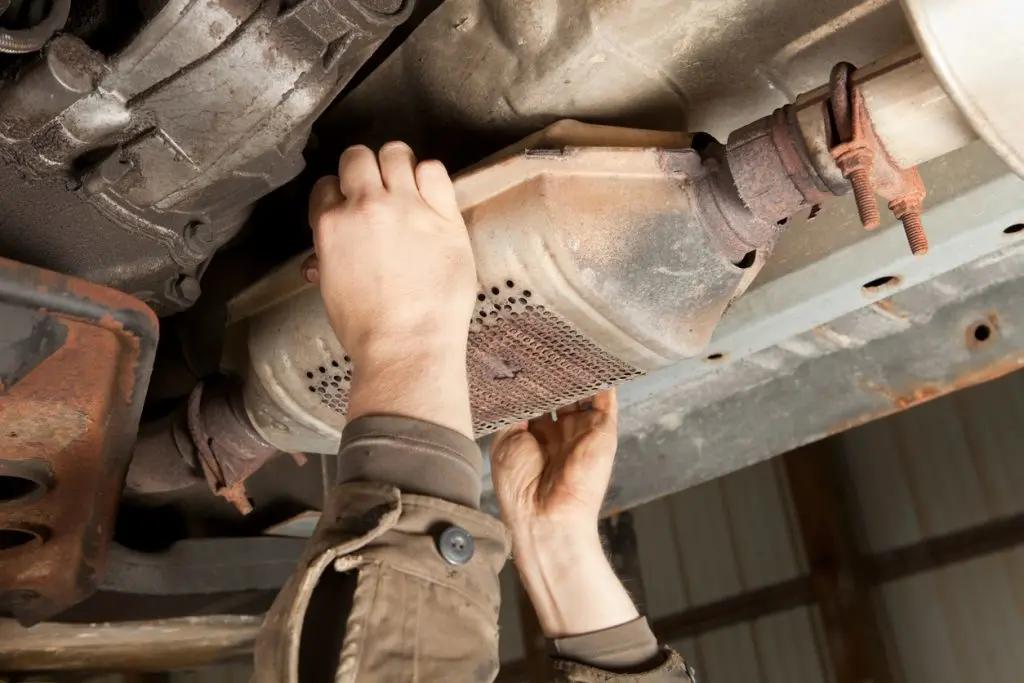

If you know what you're doing it's easy to steal CATs from exhausts for their valuable metals (Picture iStock/BanksPhotos)
Drivers shouldn't just be worried about having their car stolen. They're actually more likely to have something pinched from their car. And that could include the catalytic converter.
Figures from London’s Metropolitan Police reveal that in the first six months of 2019, thefts of this component, which makes up a part of the exhaust system, were nearly double the same period in 2018. We investigate the problem and give tips on how you can avoid being a victim of car (and CAT) crime.
Why are catalytic converters stolen?
Known as the CAT, these are the devices that live in the exhaust pipe. They use precious metals that react with the exhaust gases to convert carbon monoxide into carbon dioxide while other harmful gases are turned into water vapour. They also reduce nitrogen oxides to harmless nitrogen.
These are nicked so the thieves can strip out the precious metals and sell them. The price of these metals, such as palladium, platinum and rhodium, has rocketed in the last 18 months.
This is what the inside of a CAT looks like (Picture iStock/mipan)
How are CATs stolen?
As the CAT is part of the exhaust system, it’s located beneath the car so thieves must slip under the vehicle to remove it. They either do this by unscrewing it or in some cases, sawing it off. The first many drivers know of it is when they return to their car and an exhaust emissions warning light flashes up on the dashboard.
What’s the cost of replacing a CAT?
That depends on the car and how hamfisted the thieves are. According to warranty provider MotorEasy, the part usually costs around £900 while the labour to have it fitted is about £400 on top. But it could cost more if the thieves destroy the exhaust system when they’re getting the CAT off.
Which cars are vulnerable?
Thieves who know what they’re doing target low emissions cars. This is because the CATs have less work to do and the precious metals inside tend to be cleaner. Toyota is concerned because its petrol-electric hybrid Prius and Auris models are being particularly targeted. The Japanese firm has reduced the price of replacement CATs for drivers who’ve had them stolen.
SUVs and 4x4s are targeted too because their high ground clearance makes it easy for crooks to crawl underneath them.
How to stop CAT theft
Police are advising drivers to park in garages or other well-lit areas. In some cases, manufacturers are now making devices that protect the CAT. Drivers can also have their CATs marked and registered with a permanent and unique code. This reduces their desirability.
Another means of protection are devices that lock the catalytic converter to the car. These cost around £250 and are available for a wide variety of vehicles from companies such as Catloc and Catlock.
Thefts of premium cars on the up
Latest government stats show that nearly three quarters of all car theft (72 per cent) is theft from a vehicle. Thefts of a vehicle account for 9 per cent. However, thefts of premium vehicles such as BMW, Audi and Mercedes-Benz are on the up.
New research from insurer Direct Line shows that there were more reported thefts of premium cars in the first half of 2019 than in the whole of 2015. Premium vehicles account for nearly two fifths (37 per cent) of car thefts despite only making up a quarter of all registered vehicles.

Ideally you want to keep people like him out of your car (Picture iStock/PredragImages)
Tips to cut car crime
The first thing to do is to remove any valuables from your car. That includes portable sat navs. Don’t simply stash them in the glovebox. That’s the first place any crook will look after smashing a window.
Remember to lock your car. It sounds obvious but police say a lot of thefts from cars occur when people forget to lock their doors, perhaps when they’re paying for fuel.
Invest in an anti-theft device. Steering or pedal locks put crooks off, causing them to move onto softer targets. Owners of more expensive motors frequently buy tracking systems. Find independent assessments of aftermarket security devices from experts Thatcham here.
If you shut a computer in the boot, make sure it’s properly switched off. Some criminals have been known to hunt for Bluetooth or wireless signals in public car parks enabling them to pinpoint which cars have valuables hidden in them.
When you get home, don’t just chuck your keys on a table by the front door. Put them in a drawer that’s well away from prying eyes.
We’ve already investigated how to stop thefts of ‘keyless’ cars here. You can cut the chances of it happening to you by keeping your keys away from the front door. And store keys in a Faraday pouch (a bag or box that stops the signal it transmits getting out).
Alternatively check your car’s user manual to see if the key can be disabled. On some newer models, the manufacturers are building a safety device into the key which disables it when it’s stationary. Insurance industry tester Thatcham has a Consumer Security Rating for newer vehicles.
More from Motoring news and advice
View more
Motoring news and advice
Expert advice: why old tyres can be dangerous
Motoring news and advice
Expert advice: why old tyres can be dangerous
Motoring news and advice
Expert advice: why old tyres can be dangerous
Motoring news and advice
Driving holidays on the up: great places to stop on British road trips
Motoring news and advice
Driving holidays on the up: great places to stop on British road trips
Motoring news and advice
Driving holidays on the up: great places to stop on British road trips
Motoring news and advice
Driving holidays on the up: great places to stop on British road trips
Motoring news and advice
Do you play fuel station roulette? All about when the low fuel light is on
Motoring news and advice
Do you play fuel station roulette? All about when the low fuel light is on
Motoring news and advice
Do you play fuel station roulette? All about when the low fuel light is on
Motoring news and advice
Do you play fuel station roulette? All about when the low fuel light is on
Motoring news and advice
Stressed drivers: How to stay calm when behind the wheel of your car
Motoring news and advice
Stressed drivers: How to stay calm when behind the wheel of your car
Motoring news and advice
Stressed drivers: How to stay calm when behind the wheel of your car
Motoring news and advice
Stressed drivers: How to stay calm when behind the wheel of your car

Motoring news and advice
Why should you do a vehicle history check?
Motoring news and advice
Why should you do a vehicle history check?
Motoring news and advice
Why should you do a vehicle history check?
Motoring news and advice
Why should you do a vehicle history check?
Motoring news and advice
How to fit a bike rack to your vehicle
Motoring news and advice
How to fit a bike rack to your vehicle
Motoring news and advice
How to fit a bike rack to your vehicle
Motoring news and advice