Motoring news and advice

Breakdown cover
Shop and services
Help and support
Drivers in France need an emissions sticker to enter famous cities
By James Mills
Last updated: January 25, 2017
By James Mills
Last updated: January 25, 2017
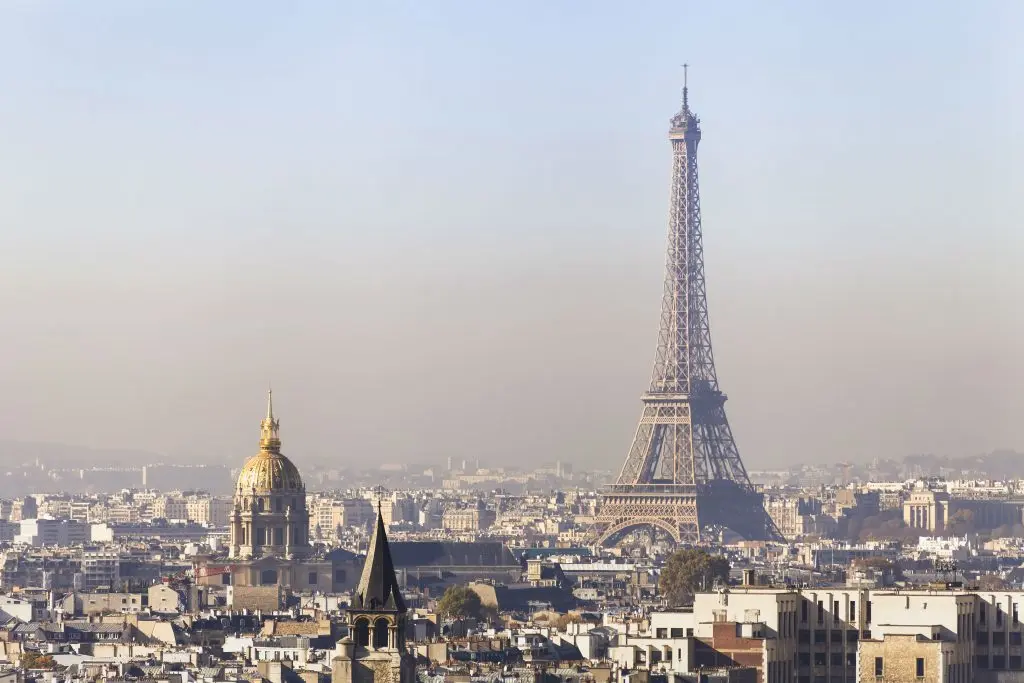
Air pollution means cars with high emissions could be prevented from entering Paris or Lyon
As millions of Britons make plans for their Easter or summer holidays, travellers driving to France must ensure that their car has an emissions sticker when visiting Paris or Lyon – the two largest cities in France.
The sticker system has been introduced to help tackle air pollution in city environments, and is active in Grenoble, Lille, Strasbourg and Toulouse as well. Other French cities are likely to join the scheme.
Called Crit’Air, it effectively bans old cars from city centres during weekdays and will allow authorities to restrict which cars are permitted to enter cities.
Paris’ air quality initiative has been introduced by Anne Hidalgo, the first woman to be appointed mayor of the French capital.
The new Crit’Air scheme came into force in Paris on 22 January. French and foreign registered vehicles must be fitted with one of a range of stickers, or vignettes, based around a colour-coded system that indicates the emissions of cars, lorries, motorbikes and buses.
There are six categories, ranging from the cleanest, Crit’Air 1, to the most polluting, Crit’Air 6.
Stickers cost £3.60 (€4.18) each, including postage, and can be purchased online from the Crit’Air website. The website will accept foreign registered vehicles from 1 February.
British drivers visiting Paris
The UK Government estimates that 17 million British nationals visit France each year. And more Brits visit Paris than any other destination in France. They’re not alone; the city is often rated the world’s most popular tourist destination.
Many British visitors choose to drive, as it’s just a three hour drive from Calais, and two and a half hours from Dieppe.
The new air pollution policy means that British tourists driving their own car into the City of Light for enlightenment, fine dining, culture or to soak up its historic landmarks must display a vignette between 8am and 8pm.
Failing to display a vignette while driving in Paris will result in an on-the-spot fine of between £58 - £117 (€68 - €135).
How does the Crit’Air scheme work?

Vehicles wishing to drive in Paris, Lille, Strasbourg, Lyon, Toulouse or Grenoble between 8am and 8pm, Monday to Friday, must display a Crit’Air vignette.
France’s ministry for the environment and energy has based the sticker system around European Union vehicle emissions standards. These dictate the maximum level of pollutants that vehicles may emit to be certified for sale, and were introduced in 1991, as ‘Euro 1’. The latest, Euro 6, came into force in September, 2015.
All drivers wishing to drive into Paris, Lyon or Grenoble need to check which emissions legislation their car conforms to, and then must buy the corresponding sticker.
When pollution levels become dangerously high, authorities can choose to stop the dirtiest vehicles from entering the city.
Many older cars have not been assigned a category. It means they cannot be driven in Paris, Lyon or Grenoble during the operating hours of the scheme. You can read our guide to the lowest polluting cars, here.
Will other French cities introduce Crit’Air?
It’s highly likely they will. A total of 22 French cities and towns are considering joining Crit’Air. These include some of the largest, such as Avignon, Bordeaux, Dijon and Rouen.
What other steps might they take?
Ultimately, Paris plans to ban diesel-powered vehicles by 2025, reasoning that they are responsible for the bulk of harmful nitrogen oxide (NOx) emissions.
Are there similar plans for London?
London intends to introduce an ultra low emissions zone (ULEZ) in September, 2020. Authorities say it can help tackle poor air quality, which can be attributed to 9,400 deaths in London each year.
It will operate 24 hours a day, seven days a week. The cleanest cars will be able to drive into the ULEZ for free, but models emitting too much pollution will have to pay a daily charge of £10 – in addition to the current £11.50 Congestion Charge.
Failing to pay the charge will result in a maximum £130 fine for cars, and £1000 for lorries and buses.
More from Motoring news and advice
View more
Motoring news and advice
Expert advice: why old tyres can be dangerous
Motoring news and advice
Expert advice: why old tyres can be dangerous
Motoring news and advice
Expert advice: why old tyres can be dangerous
Motoring news and advice
Driving holidays on the up: great places to stop on British road trips
Motoring news and advice
Driving holidays on the up: great places to stop on British road trips
Motoring news and advice
Driving holidays on the up: great places to stop on British road trips
Motoring news and advice
Driving holidays on the up: great places to stop on British road trips
Motoring news and advice
Do you play fuel station roulette? All about when the low fuel light is on
Motoring news and advice
Do you play fuel station roulette? All about when the low fuel light is on
Motoring news and advice
Do you play fuel station roulette? All about when the low fuel light is on
Motoring news and advice
Do you play fuel station roulette? All about when the low fuel light is on
Motoring news and advice
Stressed drivers: How to stay calm when behind the wheel of your car
Motoring news and advice
Stressed drivers: How to stay calm when behind the wheel of your car
Motoring news and advice
Stressed drivers: How to stay calm when behind the wheel of your car
Motoring news and advice
Stressed drivers: How to stay calm when behind the wheel of your car

Motoring news and advice
Why should you do a vehicle history check?
Motoring news and advice
Why should you do a vehicle history check?
Motoring news and advice
Why should you do a vehicle history check?
Motoring news and advice
Why should you do a vehicle history check?

Motoring news and advice
How to fit a bike rack to your vehicle
Motoring news and advice
How to fit a bike rack to your vehicle
Motoring news and advice
How to fit a bike rack to your vehicle
Motoring news and advice