Motoring news and advice

Breakdown cover
Shop and services
Help and support
Cheap running costs and reliability – why electric car sales are booming
By James Foxall
Last updated: November 24, 2020
By James Foxall
Last updated: November 24, 2020
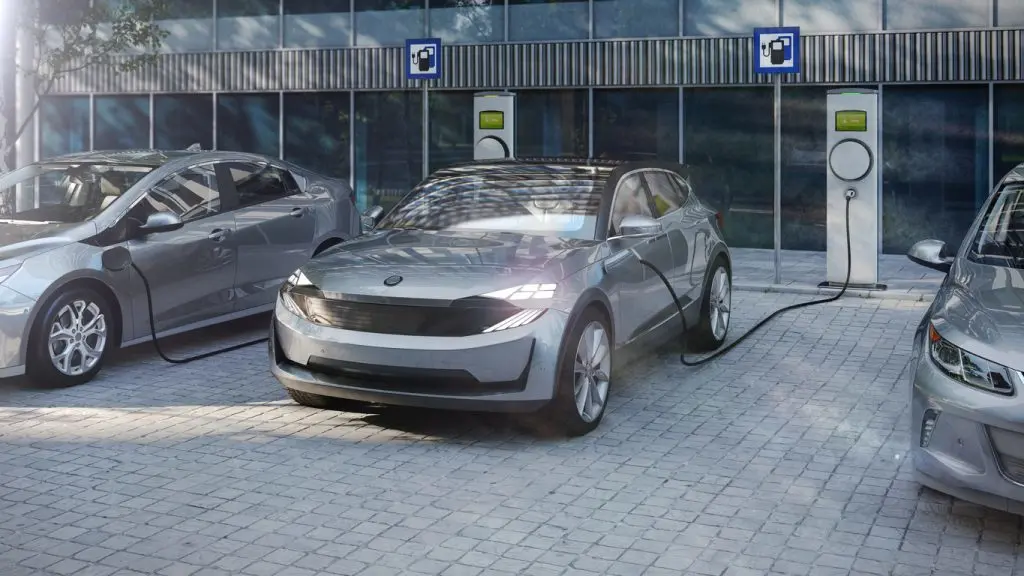

Sales of new electric cars are rising in the UK (Picture iStock/SvenLoeffler)
Electric car sales are booming in the UK. New figures reveal that in the first 10 months of 2020, purchases of new battery-powered motors were up by 195 per cent in the UK on the same period the year before. As well as an ever-expanding choice, much of it is down to a growing number of car buyers waking up to the benefits of electric motoring.
Rather than just being easier and cheaper to fuel – power for electric cars costs about a third of conventional fuels – electric cars are also cheaper to run. Here we look at why they cost so much less than internal combustion models.
Why are electric cars more reliable?
Electric cars have fewer moving parts than models with combustion engines. A petrol or diesel car needs fuel, fast-moving parts to burn that fuel and oil to lubricate all those rapidly spinning and pumping components. For parts to keep your car in tip-top condition, simply visit the Green Flag Shop.
An electric motor contains just TWO main parts. These are a stator and a rotator. The stator is static and generates a rotating magnetic field when the electric current from the battery passes through it. This magnetic field makes the rotator spin. The rotator is then connected to a transmission that drives the wheels.

The battery is the large silver rectangle in the middle of the vehicle with the motor between the front wheels (Picture iStock/SvenLoeffler)
Why are electric cars cheaper to service?
For a start electric motors don’t have any oil to be changed. And that means there’s no oil filter to gunk up and need replacing. As electric motors don’t require air, other than for cooling, there are no air filters to be renewed. Neither do they have a conventional gearbox or clutch. And of course there’s no exhaust system. So an electric motor shouldn’t need any real attention at all.
The result, according to one survey by data expert CAP HPI, is that servicing an electric car can cost between a third and a quarter less than a conventional combustion engine model.
How braking slows down wear and tear
All electric cars feature what is known as regenerative braking. This is where the motor is reversed and becomes a generator, sending charge back into the battery. It enables drivers to create energy – and therefore mileage – out of nothing.
But while it’s in this regenerative mode, the motor provides a mild braking effect (you can adjust it to taste in some cars). This means that you don’t have to use the brakes as much so their parts such as pads and discs don’t wear out as frequently.
Servicing intervals are longer
When you have a conventional car serviced, most of the work is on the engine. Although modern engines are reliable things, they still need regular maintenance. Most car makers recommend internal combustion engine models are serviced about every 12,000 miles or once a year.
Electric cars typically feature longer service intervals, usually about every 18,000 miles or every other year. And less servicing means less time spent visiting garages and being without your car.
The battery in an electric car is made up of multiple cells to guarantee a long life span (Picture iStock/Supersmario)
Battery life shouldn’t be a problem
The batteries in mobile phones and lap top computers decline in performance rapidly. Those in cars don't do so nearly as quickly. Electric car batteries are made up of multiple cells, like hundreds of mobile phone batteries packed together. The effect of declining performance in individual cells is masked by the fact there are so many of them.
Research by Plug In America found that after seven years of use, a Tesla Model S will still have around 93 per cent battery capacity. That’s a 1 per cent loss per year. In addition, most electric cars come with a manufacturer warranty that covers the battery for eight years or 100,000-120,000 miles. If the battery drops below a specific capacity in that time, the manufacturer should replace them free of charge.
More from Motoring news and advice
View more
Motoring news and advice
Expert advice: why old tyres can be dangerous
Motoring news and advice
Expert advice: why old tyres can be dangerous
Motoring news and advice
Expert advice: why old tyres can be dangerous

Motoring news and advice
Driving holidays on the up: great places to stop on British road trips
Motoring news and advice
Driving holidays on the up: great places to stop on British road trips
Motoring news and advice
Driving holidays on the up: great places to stop on British road trips
Motoring news and advice
Driving holidays on the up: great places to stop on British road trips
Motoring news and advice
Do you play fuel station roulette? All about when the low fuel light is on
Motoring news and advice
Do you play fuel station roulette? All about when the low fuel light is on
Motoring news and advice
Do you play fuel station roulette? All about when the low fuel light is on
Motoring news and advice
Do you play fuel station roulette? All about when the low fuel light is on

Motoring news and advice
Stressed drivers: How to stay calm when behind the wheel of your car
Motoring news and advice
Stressed drivers: How to stay calm when behind the wheel of your car
Motoring news and advice
Stressed drivers: How to stay calm when behind the wheel of your car
Motoring news and advice
Stressed drivers: How to stay calm when behind the wheel of your car

Motoring news and advice
Why should you do a vehicle history check?
Motoring news and advice
Why should you do a vehicle history check?
Motoring news and advice
Why should you do a vehicle history check?
Motoring news and advice
Why should you do a vehicle history check?

Motoring news and advice
How to fit a bike rack to your vehicle
Motoring news and advice
How to fit a bike rack to your vehicle
Motoring news and advice
How to fit a bike rack to your vehicle
Motoring news and advice