Motoring news and advice

Breakdown cover
Shop and services
Help and support
Expert advice: Finding and fixing a broken fuse in your car
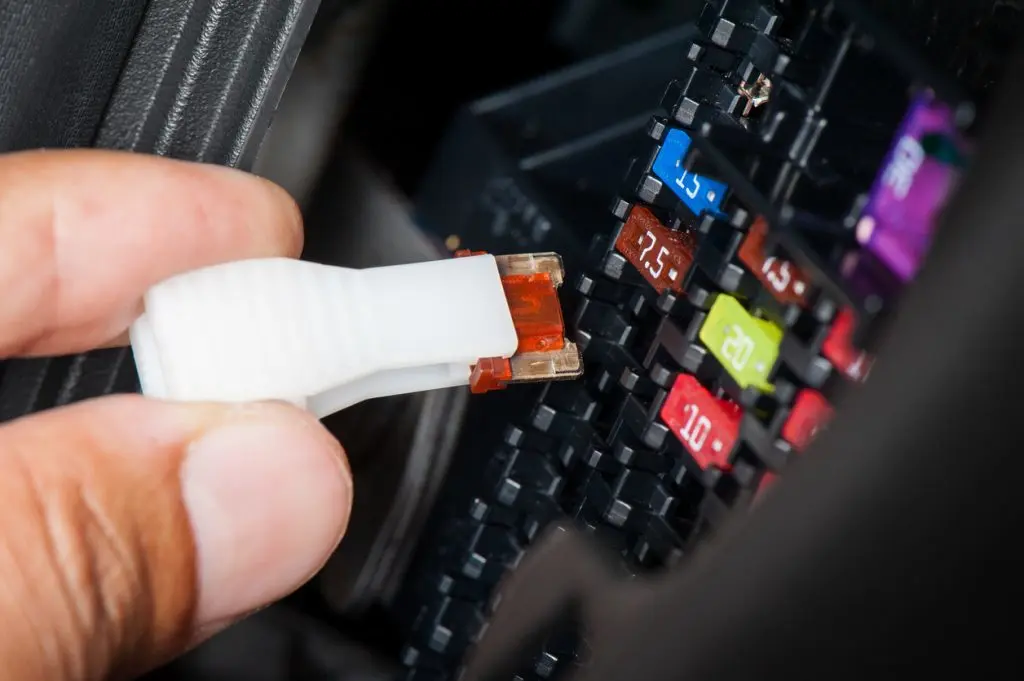
Being able to fix a broken fuse in a car is one of the handiest pieces of knowledge any car driver can deploy. At some point in your motoring life a fuse in your car will blow. And very often you don’t need to pay an expensive motor mechanic to fix it.
You should be able to tell instantly if you’ve got a blown fuse because a function that you take for granted will stop working. It might be the 12-volt power socket, the windscreen wipers or the indicators. If it is the fuse that’s causing the problem, you may be able to fix it in a couple of minutes with a part that costs pennies rather than paying a mechanic. Here’s how.
Find the fuse box
First thing’s first: before you fiddle about with a car’s electrics make sure the ignition is turned off. If your car has a traditional key, remove it from the ignition. Then find the fuse box. Your car’s user manual is a good place to start. It should tell you where the fuse box is and the different fuses that are needed. The fuse box will probably be on the lower part of the dashboard below the steering wheel on the driver’s side, or in the engine compartment. It will have a cover that will be easy to remove and it should be easily accessible.Finding the broken fuse
Let’s assume it’s the 12-volt power supply that’s packed up. It’s common for the fuses on these to blow, particularly if you’re constantly using the socket to charge phones and tablets or power sat navs. On the cover of the fuse box, there should be a diagram showing which fuse does what. In this case, locate the fuse for the 12v power supply.
Gently does it

Fuses use different colours to denote different capacities (Picture iStock/weirdlittlebiscuit)
You need to remove the appropriate fuse as gently as possible. Fuses are fiddly and fragile. There might be a specific tool inside the fuse box to get hold of the fuses more easily. Either way, going in hamfisted might cause a fuse to snap. If that happens, getting the remains out could mean you’ll have to call in a professional anyway. Once you’ve removed the fuse for, in this case, the 12v socket you need to examine it. This is to verify that it is actually the fuse that’s broken. You should be able to see that it’s no longer viable because it’ll have a damaged filament or be black inside.
Replace like with like
It’s important that you replace a 30-amp fuse with another 30-amp fuse. If you don’t, you could cause serious electrical problems.
Test if it really is the fuse
If by looking at the fuse you’re not sure that it’s blown, you could try the following. Find a fuse from a different feature that’s the same amperage, remove it and put it into the fuse slot for the 12v supply. Replace the fuse box cover, turn on the ignition and see if the function now works. If it does, you know which fuse you need to buy from the motor retailer. Turn everything off again, go back to the fuse box, put the fuse back into its original slot and head to the shops.
What if it doesn’t work?
Of course, the problem might be more fundamental than the fuse. It might be a problem with a switch, socket or connection. If replacing the fuse doesn’t cure the problem, it’s time to take your car to a professional. Equally, if the fuse blows soon after you’ve replaced it, there’s something going on in your car’s electrics so seek professional advice.
_ Nick Reid is head of automotive technology for Green Flag and is a fellow of the Institute of the Motor Industry_
More from Motoring news and advice
View more
Motoring news and advice
Expert advice: why old tyres can be dangerous
Motoring news and advice
Expert advice: why old tyres can be dangerous
Motoring news and advice
Expert advice: why old tyres can be dangerous

Motoring news and advice
Driving holidays on the up: great places to stop on British road trips
Motoring news and advice
Driving holidays on the up: great places to stop on British road trips
Motoring news and advice
Driving holidays on the up: great places to stop on British road trips
Motoring news and advice
Driving holidays on the up: great places to stop on British road trips
Motoring news and advice
Do you play fuel station roulette? All about when the low fuel light is on
Motoring news and advice
Do you play fuel station roulette? All about when the low fuel light is on
Motoring news and advice
Do you play fuel station roulette? All about when the low fuel light is on
Motoring news and advice
Do you play fuel station roulette? All about when the low fuel light is on

Motoring news and advice
Stressed drivers: How to stay calm when behind the wheel of your car
Motoring news and advice
Stressed drivers: How to stay calm when behind the wheel of your car
Motoring news and advice
Stressed drivers: How to stay calm when behind the wheel of your car
Motoring news and advice
Stressed drivers: How to stay calm when behind the wheel of your car

Motoring news and advice
Why should you do a vehicle history check?
Motoring news and advice
Why should you do a vehicle history check?
Motoring news and advice
Why should you do a vehicle history check?
Motoring news and advice
Why should you do a vehicle history check?

Motoring news and advice
How to fit a bike rack to your vehicle
Motoring news and advice
How to fit a bike rack to your vehicle
Motoring news and advice
How to fit a bike rack to your vehicle
Motoring news and advice