Motoring news and advice

Breakdown cover
Shop and services
Help and support
The manual handbrake is history and it’s costing us dear
By James Foxall
Last updated: December 28, 2021
By James Foxall
Last updated: December 28, 2021
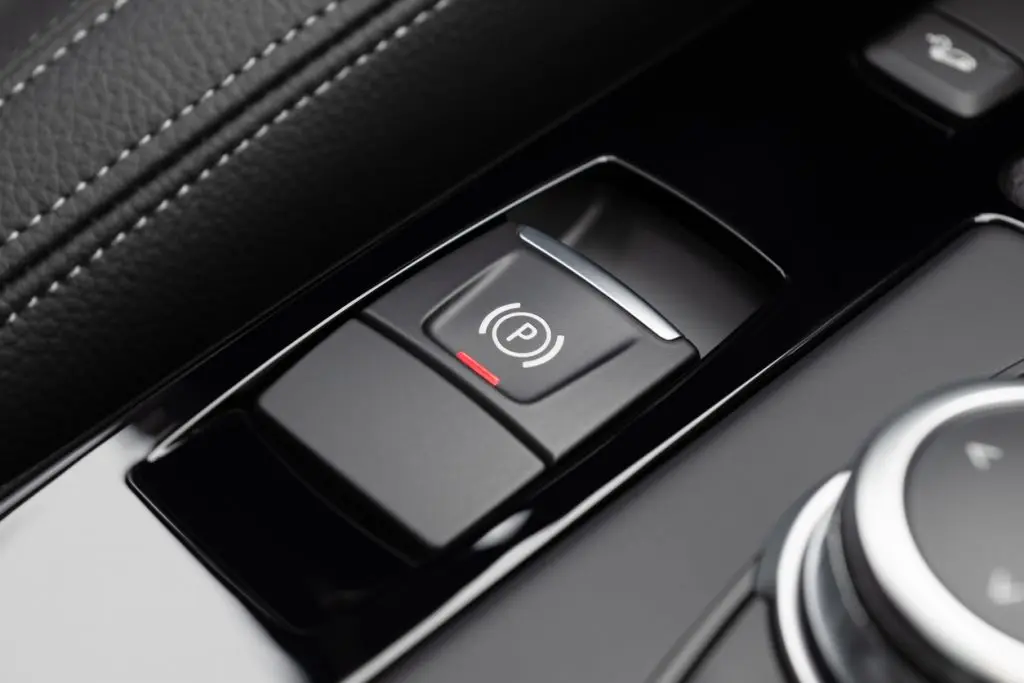
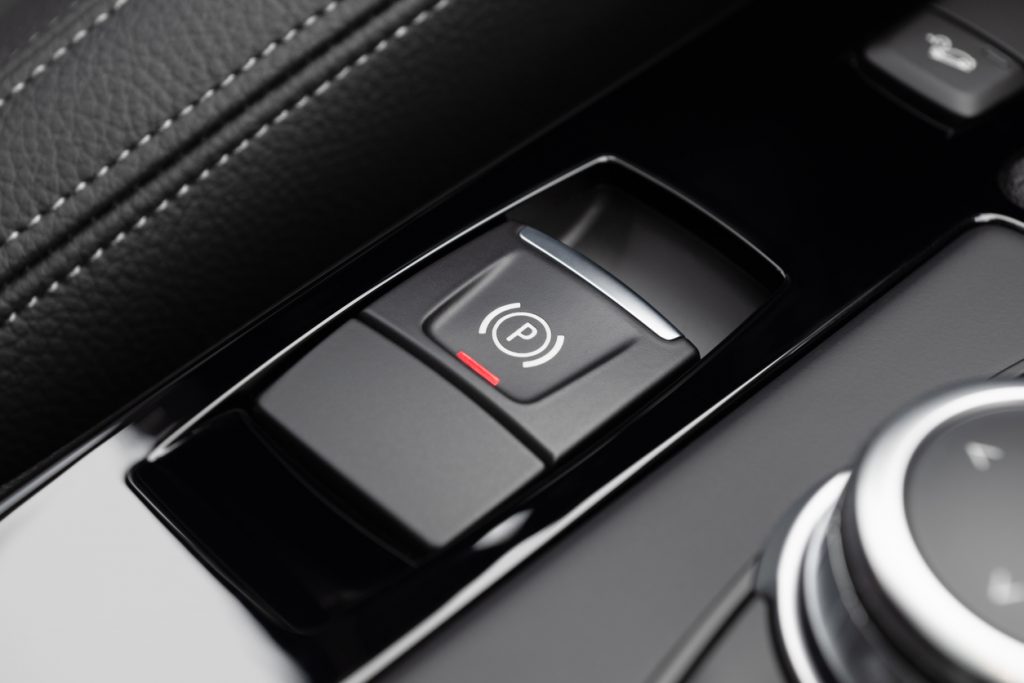
Most new cars have an electronic parking brake (Picture iStock/Kenneth-Cheung)
If you bought a car that’s either new or just a couple of years old, you might have noticed something missing between the seats. Back in the day there used to be a lever that would operate the parking brake, more commonly known as the handbrake.
No longer. The reassuring old handbrake has been replaced by the much less substantial electronic version. And it could be costing us dear. Read on to find out why.
What is an electronic parking brake?
The familiar lever with a button on the end that you yank up after coming to a halt is how most of us were introduced to the parking brake. And that’s why it was called the handbrake. Pulling on that lever caused a pair of cables to apply the rear brake pads or shoes (on drum brakes) to the car’s rear wheels.
An electronic parking brake has no cable. When you pull up the electronic button on the centre console, it triggers a motor which moves the rear brake pads onto the rear wheels. It’s usually accompanied by a whirring noise which is the motor doing its thing.
Most electronic parking brakes automatically disengage when you lift the clutch or press the accelerator on an automatic car.
How many new cars have electronic handbrakes?
Fewer than two in 10 new cars come with a manual handbrake. The third edition of the CarGurus Manual Handbrake Report reveals that the proportion of new cars with a manual handbrake fell to 17 per cent in 2021. The number was 24 per cent in 2020 and 31 per cent in 2019.
According to the report, the Vauxhall Corsa, SEAT Leon and BMW 4 Series have all dropped the manual handbrake over the past 12 months.
The manual handbrake is increasingly a thing of the past (Picture iStock/LumiNola)
That means there aren’t many cars with old-style handbrakes
Indeed there aren’t. In its study of 642 models offered by 38 car makers, only Fiat's performance brand Abarth has a manual handbrake across its whole range. Budget Romanian brand Dacia has a manual handbrake on two thirds of its cars.
The research found that big name car firms such as Volvo, Jaguar, Porsche and Mercedes-Benz no longer offer any cars with manual handbrakes. Just 1 per cent of Audi’s range had a manual handbrake while 6 per cent of Peugeot’s did.
Why are electronic parking brakes expensive to fix?
As they’re significantly more complicated, electronic brakes are much more expensive to put right. Data from warranty provider MotorEasy shows that the average cost of repairing a faulty electronic parking brake is £831. Mending a manual handbrake costs on average £149. That’s less than a fifth of the price.
According to MotorEasy’s records, the most expensive parking brake repair cost it’s ever paid out on is £2,005 to fix the system on a 10-year-old Range Rover.
Why do so many car makers use electronic brakes?
Car makers are desperate to free up space in their cockpits to make them appear more sleek and stylish. They also need to create areas for 21st century lifestyles such as wireless mobile phone charging plates. Electronic parking brakes create the room to do this.
These brakes also have additional features. For example, in many new cars, when you turn the engine off, the parking brake automatically engages. And the systems are also child proof so kids can’t push the button and let the brake off by accident.
More from Motoring news and advice
View more
Motoring news and advice
Expert advice: why old tyres can be dangerous
Motoring news and advice
Expert advice: why old tyres can be dangerous
Motoring news and advice
Expert advice: why old tyres can be dangerous
Motoring news and advice
Driving holidays on the up: great places to stop on British road trips
Motoring news and advice
Driving holidays on the up: great places to stop on British road trips
Motoring news and advice
Driving holidays on the up: great places to stop on British road trips
Motoring news and advice
Driving holidays on the up: great places to stop on British road trips
Motoring news and advice
Do you play fuel station roulette? All about when the low fuel light is on
Motoring news and advice
Do you play fuel station roulette? All about when the low fuel light is on
Motoring news and advice
Do you play fuel station roulette? All about when the low fuel light is on
Motoring news and advice
Do you play fuel station roulette? All about when the low fuel light is on
Motoring news and advice
Stressed drivers: How to stay calm when behind the wheel of your car
Motoring news and advice
Stressed drivers: How to stay calm when behind the wheel of your car
Motoring news and advice
Stressed drivers: How to stay calm when behind the wheel of your car
Motoring news and advice
Stressed drivers: How to stay calm when behind the wheel of your car

Motoring news and advice
Why should you do a vehicle history check?
Motoring news and advice
Why should you do a vehicle history check?
Motoring news and advice
Why should you do a vehicle history check?
Motoring news and advice
Why should you do a vehicle history check?
Motoring news and advice
How to fit a bike rack to your vehicle
Motoring news and advice
How to fit a bike rack to your vehicle
Motoring news and advice
How to fit a bike rack to your vehicle
Motoring news and advice