Motoring news and advice

Breakdown cover
Shop and services
Help and support
Expert advice: how to prevent car battery trouble
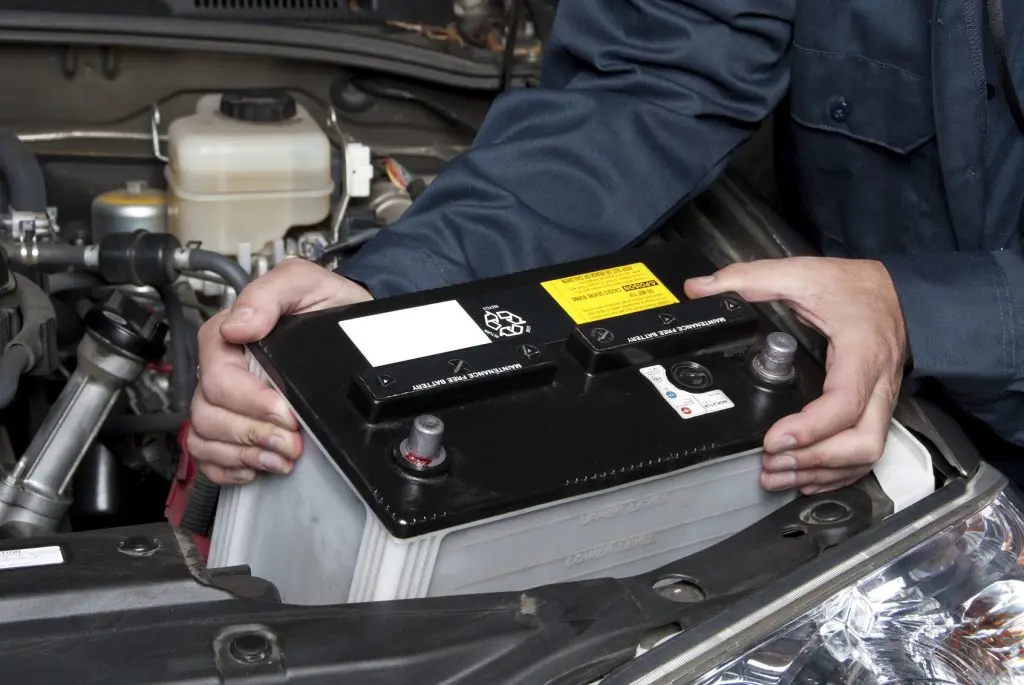

Battery trouble is the number one reason that Green Flag’s technicians are called out to broken down cars. So it’s true to say that the battery is the weakest link in a car. New research by parts company Mopar shows that every year, around a fifth of car batteries in the UK need to be replaced.
The reason people get caught out by battery trouble is that frequently there are few pointers that it’s about to strike. That’s why Green Flag’s new AlertMe technology is such a breakthrough. It can tell drivers when a car battery is on the verge of failing in sufficient time for them to do something about it. If you don’t have AlertMe, here’s why your battery is the power behind your engine.
How the battery starts your engine
Up to the 1960s, pretty much every car had a hole in its front bumper where you could slot in a starting or cranking handle. By putting your back into it and turning this you turned the engine over and hopefully it fired into life. That job is now done by a starter motor which is powered by the car’s battery. Although the starter motor doesn’t operate for long, it can sap a lot of power from the battery. Turning an engine over does require a bit of oomph. Anyone who’s done the job using a cranking handle will know. And the bigger the engine and the colder the weather, which makes the oil thicker – think running in mud!– the more effort that’s required to get an engine going. Once the battery has done that main job, you might forgive it for feeling a little jaded.
What else does the battery do?
In addition to powering the starter motor, the battery also provides the juice for the vehicle’s other electrical systems such as the numerous computers that control the engine, traction control, ventilation, sound system and sat nav etc on top of basic things like the lights and wipers. So it has quite a big job on its hands. If the battery isn’t constantly being charged while you drive, the car gradually stops working: the radio cuts out; the lights die; and eventually the engine stops.
How the battery is charged
The battery works with an alternator which is attached to the engine by a rubber belt. You may have heard this called the fan belt as in the old days the belt went around the engine’s cooling fan too. When the engine is running, the pulley on the end of the alternator is driven by the belt which in turn produces electrical current. The current is then fed into the battery to ensure it always has plenty of charge for the job it needs to do.
What the battery warning light means

Car mechanics have equipment that will tell you the state of your battery
A red light in the shape of a battery should come on when you turn the car’s ignition on. It should then go out almost instantly. This is the car’s computer checking that the battery is in working order. If the battery light comes on while you’re driving, it means there’s a problem with the charging system. What it doesn’t mean is that the battery is dead. In fact, your car will keep driving with the battery light on until all the charge in the battery is exhausted. It’s then that your car will stop. What the battery light usually means is that the alternator, or the link between it and the engine, has failed. So head to a garage and get them to check things out. What you shouldn’t do is simply buy a new battery. If there’s a problem with the alternator, a new battery will run down almost as quickly as the old one. Similarly, if when you turn the ignition on the battery light doesn’t come on, nine times out of 10 this is an indication the circuits inside the alternator have failed. Again, the Alternator won’t be charging your battery.
How to treat your battery
Car batteries are heavy duty bits of kit. They usually have a life span of between five and seven years. However, how they’re treated has an effect on how long they’ll last. For a start, before you fire the engine, don’t switch the headlamps on or the ventilation fan up to max. This will enable your battery to concentrate its charge on the starter motor.
As we’ve seen, once it’s got the engine going, the battery needs to recover. It does this by being charged via the alternator. However, if the car isn’t driven far, the battery doesn’t get enough of a charge. And if a battery is kept at less than 80 per cent of its full charge, the acid will gather at the bottom in a process called acid stratification. To prevent this happening and keep your battery in good shape, you should drive the car for at least 20 minutes once a week to charge the battery.
Batteries for the future
Battery technology is beginning to change. Most new cars now have Stop/Start where the engine is cut when the car is stationary. As you can imagine this happens a lot, particularly in city driving and helps cut fuel consumption. But the constant starting of the engine means a different type of battery is required, typically known as an Absorbed Glass Mat (AGM). A different internal construction to a standard Lead-Acid battery enables a lot more power to be delivered in a quicker time. This helps the AGM battery cope with the repeated demands from the starter motor on vehicles equipped with Stop/Start. The downside is a complex battery management system that may need to be reset by a dealer or garage if you change the battery yourself.
 Nick Reid is head of automotive technology for Direct Line Group and a fellow of the Institute of the Motor Industry
More from Motoring news and advice
View more
Motoring news and advice
Expert advice: why old tyres can be dangerous
Motoring news and advice
Expert advice: why old tyres can be dangerous
Motoring news and advice
Expert advice: why old tyres can be dangerous

Motoring news and advice
Driving holidays on the up: great places to stop on British road trips
Motoring news and advice
Driving holidays on the up: great places to stop on British road trips
Motoring news and advice
Driving holidays on the up: great places to stop on British road trips
Motoring news and advice
Driving holidays on the up: great places to stop on British road trips
Motoring news and advice
Do you play fuel station roulette? All about when the low fuel light is on
Motoring news and advice
Do you play fuel station roulette? All about when the low fuel light is on
Motoring news and advice
Do you play fuel station roulette? All about when the low fuel light is on
Motoring news and advice
Do you play fuel station roulette? All about when the low fuel light is on

Motoring news and advice
Stressed drivers: How to stay calm when behind the wheel of your car
Motoring news and advice
Stressed drivers: How to stay calm when behind the wheel of your car
Motoring news and advice
Stressed drivers: How to stay calm when behind the wheel of your car
Motoring news and advice
Stressed drivers: How to stay calm when behind the wheel of your car

Motoring news and advice
Why should you do a vehicle history check?
Motoring news and advice
Why should you do a vehicle history check?
Motoring news and advice
Why should you do a vehicle history check?
Motoring news and advice
Why should you do a vehicle history check?

Motoring news and advice
How to fit a bike rack to your vehicle
Motoring news and advice
How to fit a bike rack to your vehicle
Motoring news and advice
How to fit a bike rack to your vehicle
Motoring news and advice